
Disclaimer
This article is for informational purposes only. Nothing in this article is intended to replace legal advice from a competent attorney or be considered legal guidance for anybody's specific legal situation. Nobody should rely on information in this article in making legal decisions without such consultation.
What if you discovered that your "irrevocable" trust isn’t actually set in stone? Many Californians feel stuck with outdated trust terms or a problematic trustee, believing there’s no way to change a permanent document. However, filing a beneficiary petition to modify trust California courts authorize is a powerful tool to fix a "broken" trust. Whether you need to improve tax efficiency or correct a drafting error, the law provides clear pathways to move forward.
I assist both individuals and fellow attorneys statewide by using Probate Code Sections 15403 and 15409 to modernize trust terms. In Santa Clara County, my ex parte filings are typically granted in 7 to 10 days. In San Mateo and Contra Costa Counties, we can often have petitions granted the same day if urgency is shown. We handle every petition for a fixed fee, ensuring you avoid the unpredictable costs and delays of traditional litigation.
Key Takeaways
- Discover how a beneficiary petition to modify trust California allows you to legally update “broken” irrevocable trusts under Probate Code Sections 15403 and 15409.
- Learn how ex parte filings can expedite your case, with results in as little as one day in San Mateo or Contra Costa and 7 to 10 days in Santa Clara.
- Understand the process for correcting drafting mistakes or adapting trust language for better tax efficiency through a methodical, court-approved petition.
- See why specialized assistance for both clients and attorneys is handled with a predictable fixed fee that covers all filing and legal costs.
What is a Beneficiary Petition to Modify a Trust in California?
A beneficiary petition to modify trust California residents use is essentially a legal "repair kit" for an irrevocable trust. While many people assume "irrevocable" means permanent, the California Probate Court allows for surgical modifications when the document no longer functions as intended. Think of this petition as a formal request to a judge to update specific language that has become outdated, restrictive, or legally flawed. Filing a beneficiary petition to modify trust California courts recognize ensures that your inheritance isn’t trapped in a document that no longer serves your needs. This process is the primary mechanism used when a trust is "broken," meaning it fails to serve its original purpose due to drafting errors, shifts in tax laws, or unforeseen family changes.
The Legal Basis: Probate Code 15403 vs. 15409
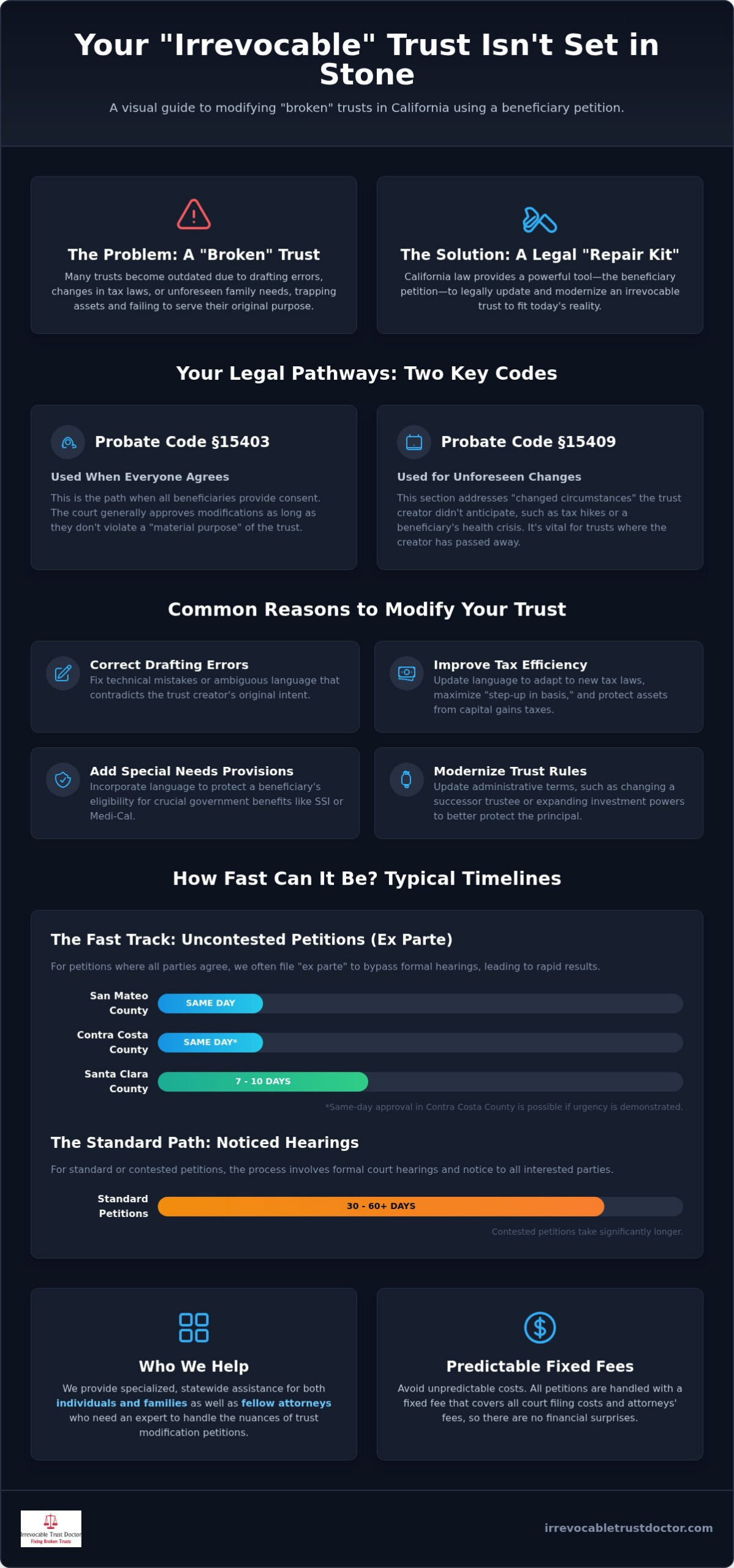
Success depends on choosing the correct statutory framework. Probate Code Section 15403 is the go-to path when all beneficiaries consent to the modification. If everyone agrees, the court is generally supportive as long as the change doesn’t violate a "material purpose" of the trust. Conversely, Probate Code Section 15409 is used for "changed circumstances" that the person who created the trust didn’t foresee. Within the broader U.S. Trust Law Overview, these California-specific codes provide the necessary flexibility to fix technical errors or update tax provisions that would otherwise drain the trust principal. Choosing the wrong section can lead to unnecessary delays or a flat denial from the judge.
Who Can File the Petition?
Both beneficiaries and trustees have the standing to initiate this process. Beneficiaries often file to protect their interests from high administrative costs or to replace a trustee who isn’t performing well. I also provide specialized assistance to local attorneys statewide who need an expert to handle the nuances of these filings. My practice focuses on speed; I regularly file uncontested petitions "ex parte," which means they are handled quickly without a standard court hearing. In Santa Clara County, these are typically granted in 7 to 10 days. In San Mateo County, we can often file and receive an order the same day. For Contra Costa County, same-day approval is possible if urgency is demonstrated. All of these matters are handled with fixed fees that cover every cost, ensuring there are no financial surprises.
Common Reasons for Filing a Trust Modification Petition
Most irrevocable trusts fail because the world changed while the document stayed the same. When I work with clients and fellow attorneys, I often find that a beneficiary petition to modify trust California courts approve is necessary to align a "broken" trust with current reality. These legal repairs are not about changing the settlor’s heart; they are about ensuring the trust can actually function in 2026. Common reasons for seeking a modification include:
- Correcting technical drafting errors that unintentionally contradict the original intent of the trust creator.
- Adapting to significant shifts in California or federal tax laws that occurred after the trust was signed.
- Adding "Special Needs" language to protect a beneficiary’s eligibility for government benefits like SSI or Medi-Cal.
- Modernizing administrative rules, such as updating who serves as a successor trustee or expanding investment powers to protect the trust principal.
Fixing "Broken" Trusts After a Settlor’s Death
If the person who created the trust is no longer alive, you might feel trapped by rigid or obsolete language. However, the California Probate Code on Trust Modification provides relief through the "changed circumstances" doctrine under Section 15409. I use this section to show the court that the settlor didn’t anticipate current events, such as a specific tax hike or a beneficiary’s health crisis. By proving these changes, we can surgically update the trust even without the creator’s consent; for those whose health crisis involves a serious accident, the Law Offices of David Davidi, APLC (mraccident.com) can offer specialized personal injury representation.
Tax Efficiency and Asset Protection
Tax laws are a moving target. Many older trusts lack the specific language needed to maximize a "step-up in basis," which can save heirs thousands in capital gains taxes. We can also restructure a trust to better shield assets from future creditors. I handle these petitions with a fixed fee, covering both my time and the court costs. Whether we file ex parte for a 7 to 10 day turnaround in Santa Clara or a same-day order in San Mateo, the goal is always speed and precision. If you’re dealing with a trust that no longer fits your financial goals, you may want to book a trust petition consultation to explore your legal options.
The Court Process: Timelines for California Trust Petitions
Every successful legal repair begins with a diagnostic consultation to identify the specific failure in your trust document. We look for the "break," whether it’s a tax provision that no longer works or an administrative rule that has become impossible to follow. Once the strategy is set, I draft and file the formal beneficiary petition to modify trust California courts require to authorize these changes. This document acts as your official request for the court to intervene and modernize the trust language.
Providing mandatory notice to all interested parties is a vital step that ensures transparency throughout the process. If the trust creator is still alive, California Probate Code § 15404 provides the framework for modification with their consent. For most "broken" trusts where the creator has passed, we rely on Sections 15403 or 15409 to achieve your goals. This stage involves identifying every person entitled to a copy of the petition and ensuring they receive it according to strict probate rules. Once notice is complete, we move toward obtaining the judge’s signed order.
Fast-Track Results: Ex Parte Petitions in Specific Counties
In Santa Clara, San Mateo, and Contra Costa Counties, my regular practice involves filing uncontested petitions "ex parte." This is a specialized procedure that allows a judge to review and sign the order without a formal, scheduled hearing. In Santa Clara County, these are typically granted in 7 to 10 days. In San Mateo County, we can often file and receive a signed order the same day. For Contra Costa County, the court may grant the petition the same day if we can clearly demonstrate "urgency" to the judge’s satisfaction. This fast-track approach is why I assist both clients and fellow attorneys statewide who need rapid results.
Standard Noticed Hearings
Standard noticed hearings generally take 30 to 60 days to reach a judge’s desk. This timeline allows for the legally required notice period, giving interested parties time to review the proposed changes. If a petition becomes contested, meaning a beneficiary or trustee objects, the process moves into litigation and can take significantly longer. To keep things simple and predictable, I handle all uncontested petitions with a fixed fee that covers every court and attorney cost. If you’re ready to fix your trust, you can book a trust petition consultation today.
Why Expert Legal Assistance is Essential for Your Petition
Probate law is exceptionally technical. A single drafting error in a beneficiary petition to modify trust California filing can lead to an immediate court denial, forcing you to start the process from scratch. Navigating the specific requirements of Probate Code Sections 15403 and 15409 requires more than just a general understanding of trust law. It requires a clinical precision that only comes from decades of specialized experience. By focusing exclusively on trust modifications, I ensure that every petition is legally sound and optimized for the fastest possible approval. There is no room for guesswork when your inheritance and tax efficiency are on the line; similarly, plan sponsors should explore Fiduciary Administration and Compliance Fees to ensure their retirement plans are managed with equal diligence.
My deep familiarity with local court rules in counties like Santa Clara and San Mateo allows me to bypass common bureaucratic obstacles. This niche expertise is why I can offer statewide assistance, helping clients from San Diego to Sacramento fix their "broken" trusts without the typical delays associated with general practice firms. Whether you’re a beneficiary feeling stuck or a trustee facing an administrative nightmare, having a specialist handle the petition ensures the process moves as quickly as the law allows.
Fixed Fees for Peace of Mind
One of the biggest pain points in legal matters is the uncertainty of hourly billing. I believe you should know exactly what your legal "repair" will cost before we ever file a document. Understanding the fees and costs associated with a court petition shouldn’t be a guessing game. For uncontested modifications, my fixed-fee model covers everything, including filing fees and all attorney time. This provides financial certainty and ensures our interests are aligned: getting your trust fixed as quickly and efficiently as possible.
Collaborating with Your Current Attorney
You don’t have to choose between your trusted local lawyer and a specialist. I often act as a "specialist surgeon" for other law firms throughout California. If your current attorney handles your general estate planning but isn’t comfortable with the complexities of a trust reformation, I can step in to handle the petition process specifically. This collaboration ensures your local counsel has the expert support needed to achieve a successful outcome for your family. Ready to start? Contact us for a consultation and let’s discuss how we can modernize your trust.
Restore Order to Your Broken Irrevocable Trust
You don’t have to remain trapped by a trust document that’s technically flawed or tax-inefficient. Filing a beneficiary petition to modify trust California probate courts recognize is a surgical way to update outdated language and protect your inheritance. Whether you need to replace a problematic trustee or add special needs provisions, the law provides a clear path for correction through Probate Code Sections 15403 and 15409. These petitions aren’t just about changing words; they’re about restoring the trust’s ability to function as intended.
As a Certified Specialist in Estate Planning, Trust, and Probate Law, I specialize in moving these petitions through the court system with maximum speed. My ex parte filings can often secure results in as little as 7 to 10 days in Santa Clara County, or even the same day in San Mateo and Contra Costa Counties. Every case is handled with total fixed-fee transparency, covering both the filing and legal costs from the start. This allows you to focus on the resolution rather than worrying about mounting hourly bills.
If you’re ready to fix your trust and move forward with financial clarity, Get a Fixed-Fee Quote for Your Trust Modification Petition. It’s time to ensure your trust serves your family’s needs in 2026 and beyond.
Frequently Asked Questions
Can a beneficiary change an irrevocable trust without the settlor’s consent?
Yes, you can modify an irrevocable trust even if the person who created it is deceased or unable to provide consent. In these situations, a beneficiary petition to modify trust California courts authorize is filed under Probate Code Section 15403 if all beneficiaries agree, or Section 15409 if circumstances have changed in ways the creator didn’t anticipate. These sections provide the legal tools necessary to fix "frozen" documents that no longer serve their intended purpose.
How much does it cost to file a trust modification petition in California?
The standard court filing fee for a probate petition in most California counties is $435. Beyond this initial fee, costs typically include the legal work required to draft a petition that meets strict court standards. I handle these petitions using a transparent fixed-fee model that covers both the court’s filing fees and all attorney fees. This approach gives you total financial certainty from the start and avoids the stress of unpredictable hourly billing.
What is the difference between Probate Code 15403 and 15409?
The difference lies in whether you have the consent of all beneficiaries or are relying on external changes. Section 15403 allows for modification if every beneficiary agrees and the change doesn’t violate a material purpose of the trust. Section 15409 is used when "changed circumstances" unknown to the trust creator make the trust difficult or expensive to run. If new tax laws or family needs make the original terms obsolete, Section 15409 is the appropriate remedy.
How long does the court process take for a trust amendment?
Timelines vary significantly based on the county and the type of filing used. If I file an uncontested petition ex parte in Santa Clara County, it’s typically granted in 7 to 10 days. In San Mateo and Contra Costa Counties, these are often granted the same day. For standard noticed hearings, the process generally takes 30 to 60 days to allow for the mandatory notice period required by California law to inform all interested parties.
Do I need to go to court for a trust modification petition?
In most uncontested cases, you won’t need to appear in court personally. When a beneficiary petition to modify trust California is handled through an ex parte filing, the judge reviews the documents in chambers and signs the order without a formal hearing. This is my standard practice in several Bay Area counties. It’s a faster, more private way to resolve trust issues without the anxiety of a public courtroom appearance or the delays of a crowded court calendar.

Article by
Robert P. Bergman, Attorney at Law
Attorney Robert P. Bergman ("Bob Bergman") has been a Board-Certified Specialist in Estate Planning, Trust and Probate Law since 2011, as certified by the California State Bar Board of Legal Specialization. For several years, Bob has assisted families and the clients of other attorneys with obtaining court orders through trust modification petitions to make necessary modifications to existing irrevocable trusts. Bob is friendly, very approachable, and believes in explaining complex legal topics in clear ordinary language so that his clients understand exactly what they're doing and why they're doing it.
Bob is often able to assist clients throughout California who are in other counties than his home county of Santa Clara through his approach to trust modification petitions.