Disclaimer
This article is for informational purposes only. Nothing in this article is intended to replace legal advice from a competent attorney or be considered legal guidance for anybody's specific legal situation. Nobody should rely on information in this article in making legal decisions without such consultation.
An irrevocable bypass trust may still be changed through a California court petition. Under Probate Code Section 15403, the court may modify or terminate a trust with all beneficiaries’ consent if the change doesn’t interfere with a material purpose of the trust; Probate Code Section 15409 may also support a change when circumstances have changed. The right approach depends on the trust’s terms and the reason for seeking a change.
If you’re considering modifying a bypass trust in California, you may be wondering whether a court petition fits your situation and what it involves. This article explains why families seek trust modifications and how California law provides a court process for changing an irrevocable trust.
You’ll learn what the court considers, how consent and notice relate to a petition, and why the bypass trust’s original purpose matters. This can help you understand the available process before deciding on a next step.
Key Takeaways
Whether a bypass trust can be changed depends on its purpose, the proposed change, and beneficiary consent.
In 2026, the federal estate tax exemption is $15.00 million per person, rising to $15.48 million on January 1, 2027 according to the Internal Revenue Service, a factor that may make older tax-planning provisions worth reviewing.
A California trust petition generally requires notice at least 30 days before the hearing, according to the California Legislature.
Uncontested ex parte petitions filed in Santa Clara County are typically granted in 7 to 10 days, and the process can assist families and attorneys across California.
Table of Contents
What Is a Trust Modification Petition, and Why Use One?
A trust modification petition asks a California court to change or terminate an irrevocable trust, including a bypass trust. Families may consider modifying a bypass trust in California when its terms no longer fit their circumstances or goals.
How Can Beneficiaries Consent to a Modification?
Beneficiary consent can support a request to modify or terminate a trust. Probate Code Section 15403 allows a court to modify or terminate an irrevocable trust with all beneficiaries’ consent if the change doesn’t interfere with a material purpose, according to the California Legislature. Probate Code Section 15404 also addresses written agreement by the settlor and all beneficiaries. If the grantor has died, the trust’s current and future beneficiaries remain important to identifying whose consent matters.
What If Not All Beneficiaries Consent?
A court may consider a petition when beneficiaries don’t all consent. If the grantor agrees, a court may approve a change when nonconsenting beneficiaries won’t be substantially impaired. Changed circumstances can also support a request to modify or terminate a trust. In 2025, the federal estate tax exemption is $13.99 million per person, according to the Internal Revenue Service. That figure may prompt families to review older tax-planning terms, but modifying a bypass trust in California can have consequences for beneficiaries and the surviving spouse.
Who Must Be Identified, and How Can Virtual Representation Matter?
Beneficiaries may include people with current, future, or conditional interests. Review the trust’s distribution terms to identify those affected, including contingent beneficiaries. California’s virtual representation law, identified as AB 565, takes effect January 1, 2026. Representation may affect how certain beneficiary interests are addressed, so the petition must account for the trust language and the proposed change.
How Does Modification Compare With Decanting?
A petition asks the court to approve a change, while decanting transfers assets from an existing trust into a new trust with different terms. Beneficiary consent may support a modification, but it does not by itself determine which legal route applies. Before modifying a bypass trust in California, consider the trust’s purpose and potential tax effects. Bypass-trust assets generally do not receive a step-up in income-tax basis, and a change may affect capital-gains treatment.
How Can a California Court Modify an Irrevocable Trust?
California courts can consider trust changes through agreement or a petition seeking court approval. The appropriate route depends on the trust terms, consent, and why the change is requested.
How Do Agreement and Court Approval Work?
Agreement can support a modification, but it doesn’t always remove the need for court approval. Probate Code Section 15404 allows modification or termination without court approval with written consent from the settlor and all beneficiaries. If those conditions aren’t met, a petition may ask the probate court to approve the change. This distinction matters when modifying a bypass trust in California because its terms may affect a surviving spouse and later beneficiaries.
When Can a Petition Be Filed Under Probate Code Section 15409?
Probate Code Section 15409 provides a basis to ask a court to modify or eliminate a trust because of changed circumstances, including changes in tax laws. The petition should identify the change, explain how it affects the trust, and describe the requested relief. For example, a surviving spouse may seek to address older tax-planning provisions that no longer fit the family’s circumstances. These details help the court assess the request.
What Should You Know About Petition Costs and Bypass Trusts?
A bypass trust is typically created after one spouse dies under an estate plan, holding assets for the surviving spouse or other beneficiaries. Its terms can shape later distributions and administration. For this practice’s trust modification petitions, fees are fixed and cover filing fees and attorney fees. If you’re considering modifying a bypass trust in California, understanding the trust’s provisions and the requested change helps clarify the petition’s scope.
What Is the California Procedure for Modifying an Irrevocable Trust?
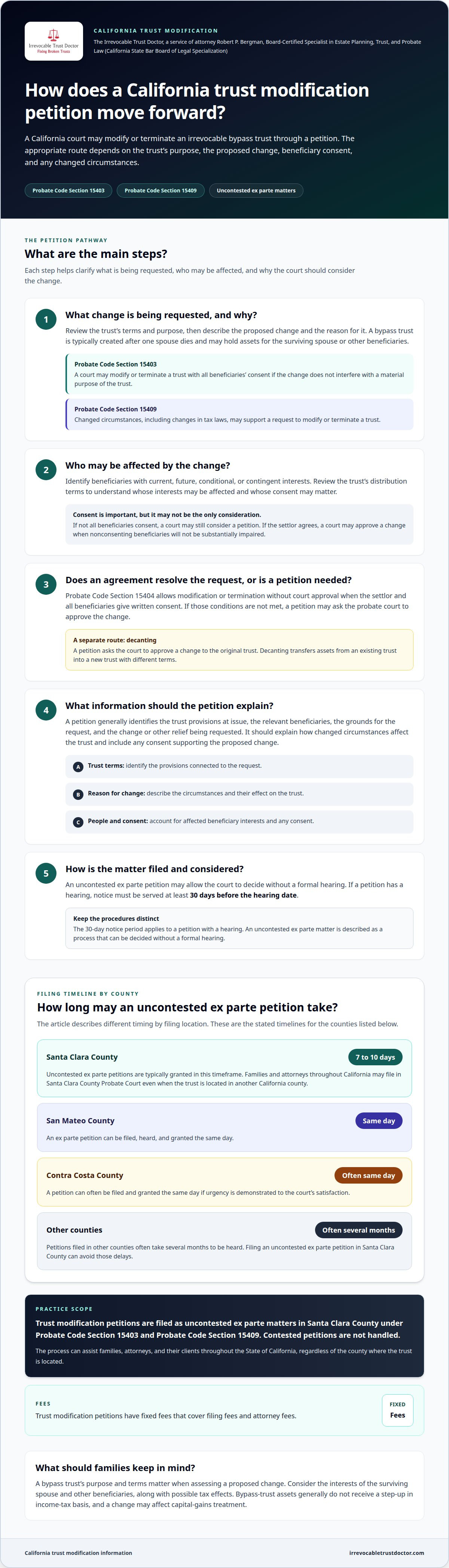
California trust modifications generally involve a petition that explains the requested change, its grounds, and the people affected. For an uncontested matter, an ex parte filing may allow the court to decide without a formal hearing.
For a petition with a hearing, notice must be served at least 30 days before the hearing date, according to the California Legislature. The petition process identifies the trust provisions at issue, relevant beneficiaries, and any consent supporting the change. An attorney can present those details and explain why the requested order fits the trust’s circumstances.
Families and attorneys throughout California can file an uncontested ex parte petition in Santa Clara County Probate Court even when a trust is located in Los Angeles County, Orange County, or elsewhere. These petitions are typically granted in 7 to 10 days. In San Mateo County, an ex parte petition can be filed, heard, and granted the same day. In Contra Costa County, it can often happen the same day if the court is satisfied that urgency exists. Petitions filed in other counties often take several months to be heard, and filing an uncontested ex parte petition in Santa Clara County can avoid those delays.
Can a bypass trust be decanted into a new trust under California law? California’s Uniform Trust Decanting Act took effect January 1, 2019. Decanting transfers assets from an existing trust into a new trust with different terms; it is a separate route from seeking a court order to modify the original trust. Consider how each route addresses the surviving spouse, beneficiary consent, administration, and possible tax effects.
How Can The Irrevocable Trust Doctor Help With a Bypass Trust Modification?
The Irrevocable Trust Doctor, a service of attorney Robert P. Bergman, Board-Certified Specialist in Estate Planning, Trust, and Probate Law (California State Bar Board of Legal Specialization), helps families, attorneys, and their clients assess whether a bypass trust is suited to an uncontested court petition.
We assist throughout the State of California by filing uncontested ex parte trust modification petitions in the Santa Clara County Probate Court, regardless of the California county where the trust is located. An ex parte petition may allow the court to consider an uncontested matter without a formal hearing. This route may be appropriate when the matter is uncontested.
The Irrevocable Trust Modification Petition addresses changes sought under Probate Code Section 15403 or Probate Code Section 15409. A Trust Petition Consultation can help clarify the proposed change, relevant trust terms, beneficiary consent, and supporting facts. Our office handles only uncontested ex parte petitions, not contested matters.
All trust modification petitions have fixed fees covering filing fees and attorneys' fees. Before filing, the petition must clearly explain the requested change and how it relates to the trust’s terms and the interests of affected beneficiaries.
If you’re considering a bypass trust modification, a focused discussion can help identify whether the uncontested petition process fits your situation. To discuss your matter, contact The Irrevocable Trust Doctor.
Frequently Asked Questions
Can an irrevocable trust be changed in California if the grantor is deceased?
A grantor’s death does not, by itself, prevent a court petition. Start by gathering the signed trust document, any later amendments, and records identifying the current trustee. These materials help distinguish the original instructions from later changes and identify the provisions the petition would address.
Who are “all the beneficiaries”?
The trust’s distribution clauses can help identify interested parties, including people who may receive assets under a later distribution provision. Make a clear list of relevant people, including their names and addresses. For example, a clause directing assets to descendants if a named beneficiary dies may affect who should be included.
Can a bypass trust be modified or amended after the first spouse dies?
A surviving spouse’s authority to amend a separate revocable trust does not automatically extend to the bypass trust. In an A-B trust arrangement, the trusts are distinct shares with different terms. Review the instrument’s division and amendment provisions to identify which share holds the assets and what authority applies.
What California law governs modification or termination of an irrevocable bypass trust?
California Probate Code Section 17201 describes what a trust petition must state: facts establishing authorization, the grounds for the request, and the names and addresses of each person. This gives the filing a practical structure. It should connect the requested order to the trust, explain the basis for relief, and identify the people involved.
Can trust beneficiaries consent to modifying a bypass trust in California?
Beneficiaries can document their agreement, but consent and a waiver of hearing notice are separate matters. A clear record should show which proposed terms each person accepts and whether they also waive notice. Keeping these points distinct helps clarify whether someone agrees to the change, the procedure, or both.