Why Santa Clara County Beneficiaries Face Urgent Trust Challenges
Santa Clara County beneficiaries often inherit trusts created decades ago, when family circumstances, tax laws, and financial realities looked completely different. A spouse who was meant to inherit the home outright now faces unexpected capital gains tax. A beneficiary with medical debt suddenly becomes ineligible for needed assistance because rigid trust language prevents distributions. An outdated trust written before recent California law changes now creates administrative nightmares nobody anticipated.
These situations demand quick resolution. Unlike probate, which moves at its own glacial pace, trust modification petitions require precise legal work within compressed timelines. Santa Clara County’s court system handles thousands of cases annually, and delays in filing or incomplete petition submissions mean your modification request gets pushed back weeks or months.
The pressure intensifies when you’re already grieving or managing financial strain. You need clarity on what’s actually possible, what the court will approve, and how long the real timeline will be. Generic legal advice from out-of-state firms or DIY template services cannot address the specific California Probate Code requirements that Santa Clara County courts enforce.
The Problem With Attempting DIY Trust Modifications
The appeal of DIY trust modification is obvious: save money, maintain control, move quickly. The reality is starkly different.
The California Probate Code establishes strict procedural rules for modifying irrevocable trusts. Your petition must include specific findings, proper legal citations, and evidence that satisfies the court’s requirements. Miss a single element, and the judge dismisses your case. You then must refile, essentially starting over and losing weeks you cannot get back.
Common DIY mistakes we see repeatedly:
- Incomplete beneficiary notices that invalidate the entire filing
- Failure to include required declarations proving standing and good cause
- Mischaracterization of trust assets or beneficiary interests
- Procedural errors that trigger judicial objections
- Missing deadlines for serving parties and filing documents
Even if your modification seems straightforward, Santa Clara County courts demand technical precision. A surviving spouse spent three months attempting to modify her husband’s irrevocable trust using an online legal document service. When she filed, the court returned the petition with a deficiency notice. Her second attempt omitted a required declaration. By the time she came to us, she had lost four months and paid filing fees twice.
You cannot learn California probate litigation standards through templates. Each jurisdiction interprets Probate Code requirements differently, and Santa Clara County judges have specific expectations about petition formatting and supporting evidence.
What We Offer: Streamlined Petition Processing
We handle the entire petition process from initial consultation through court filing. You provide us with trust documents, beneficiary information, and details about what needs to change. We evaluate whether modification is viable under current law, prepare all required legal documents, and file with Santa Clara County Superior Court on your behalf.
Our approach includes:
- Comprehensive trust analysis to identify all modification issues
- Custom petition preparation tailored to your specific trust language and facts
- Complete beneficiary and interested party identification
- Proper notice preparation and service coordination
- Court filing with verification and proof of service
- Follow-up communication with the court if needed
You work with a Certified Specialist attorney, not a paralegal or document service. That means every petition reflects deep expertise in California probate law and Santa Clara County court procedures. When your modification hits an unexpected complication, we have the knowledge to solve it.

Our 7-10 Day Turnaround Advantage Explained
Our standard timeline in Santa Clara County is 7-10 days from the filing of a petition to obtain a court order. This speed is possible because we have refined our process over years of handling trust modifications across California.
Here’s why we move faster than typical law firms:
Intake efficiency: Our trust petition worksheets capture all necessary information during your initial Zoom consultation. We do not require multiple email exchanges or follow-up calls to gather details.
Standardized templates with custom adaptation: We do not write every petition from scratch. Our proven templates meet Santa Clara County standards, then we customize them for your facts. This eliminates the learning curve that slows down generalist attorneys.
Parallel processing: While you gather documents or arrange signatures, we prepare draft petitions and begin preliminary research. We do not wait for perfect information before starting.
Direct court filing: We file electronically with the court as required, rather than mailing documents, eliminating postal delays and reducing verification timeframes.
Compare this to typical law firms in Santa Clara County. Most require initial consultations, then need additional follow-up meetings to gather documents and discuss strategy. They assign your case to a junior attorney or paralegal who researches probate code requirements. Weeks pass before your petition even reaches draft stage. By the time filing occurs, 30-45 days may have elapsed.
Your actionable step: During your first consultation, have all trust documents and a list of current beneficiaries ready. This preparation cuts our timeline to the lower end of our range.
Expertise You Cannot Replicate Without a Certified Specialist
Not every attorney handling trusts holds the Certified Specialist designation. We do, and that credential reflects genuine expertise in trust and probate law.
The Certified Specialist certification requires:
- Years of concentrated practice in probate and trust law
- Passage of a rigorous exam covering California probate code and case law
- Extensive continuing legal education in probate matters each year
- Peer evaluation confirming competency and ethics
This is not marketing language. It is a measurable standard that proves an attorney has invested serious time in understanding exactly what beneficiaries need.
A general practice attorney might handle a trust modification once or twice per year alongside wills, contracts, and other practice areas. They approach your case as one of many, without deep familiarity with court expectations or cutting-edge probate strategies. When complications arise, they research solutions rather than drawing from experience.
We live in this practice area. We know which judges prefer certain petition formats. We understand which arguments succeed in Santa Clara County courts and which ones the bench rejects. We anticipate objections before they happen, because we have seen every modification scenario imaginable. Your petition benefits from that focused expertise.
Why Our Process Protects Your Interests Better
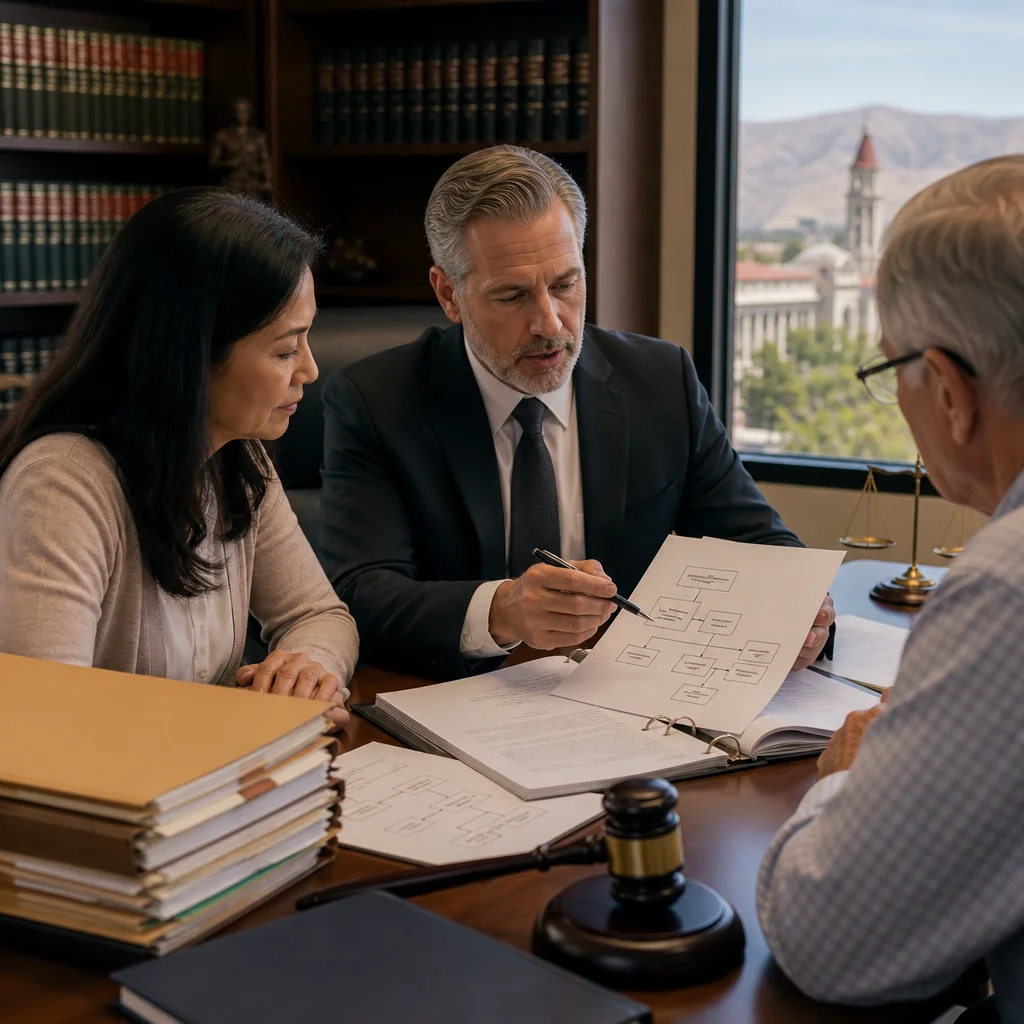
We do not just file paperwork. We strategically position your modification for approval.
Before we draft your petition, we analyze whether the modification satisfies California Probate Code requirements. Some modifications face stronger legal footing than others. We structure your petition to emphasize the strongest arguments first, then address any weaker elements with careful framing and supporting evidence.
This matters because Santa Clara County judges see dozens of modification petitions. The ones that survive objections are those that clearly demonstrate legal standing, good cause, and facts supporting the modification. Weak petitions invite opposition from hostile beneficiaries or interested parties.
We also coordinate beneficiary notice strategically. To expedite the petition, we require a waiver of notice so that the petition can be filed ex parte. Proper notice is legally required, but we handle it in ways that minimize confusion and reduce objections.
We also require all interested parties’ consent to the petition so that we can file an uncontested petition.
Cost Efficiency of Professional Petition Services
The all-in cost of working with us is typically less than attempting DIY modification with court rejection followed by reworked filings with a generalist attorney.
Consider the real cost of DIY mistakes:
- Initial filing fee: $400-600
- Second filing fee after rejection: $400-600
- Additional time researching what went wrong
- Hiring an attorney to salvage the second attempt: $2,000-4,000
- Lost time waiting for the modification to finally resolve
By contrast, our petition services cost substantially less than hiring a general practice attorney for the same outcome. You get a specialist attorney, not a paralegal or document service. You get our 7-10 day turnaround. You get a petition designed to survive court scrutiny.
Your investment protects itself through successful first-time filing. No re-filing. No corrections. No months of additional delay.
Real Outcomes Our Clients Achieve
A beneficiary in San Jose inherited her late father’s irrevocable trust, which restricted her access to trust income while she cared for his grandchildren. The trust was drafted 20 years earlier, before her circumstances changed. We prepared and filed a modification petition demonstrating changed circumstances and good cause. Within two weeks of filing, the court approved her request for increased distributions to support her caregiving responsibilities.
Another client, a surviving spouse in Cupertino, faced capital gains tax liability on the family home because the trust’s outdated language prevented a stepped-up basis adjustment. Our petition successfully modified the trust distribution schedule to avoid the tax burden entirely. The modification was approved within three weeks.
In both cases, professional petition preparation made the difference. The clients had legitimate modification reasons but lacked the legal expertise to present their cases persuasively. Our involvement ensured the court understood their circumstances and approved relief accordingly.
How Our Zoom Consultations Expedite Your Process

We conduct most initial consultations entirely through Zoom. You do not need to travel to an office or wait weeks for an appointment. You call us, we review your trust documents on screen, and we immediately assess your modification viability and timeline.
During your Zoom consultation, we can sometimes complete most of our information gathering. You explain what needs to change and why. We ask targeted questions that clarify trust language, beneficiary relationships, and financial circumstances. We use your trust document directly during the call, marking specific sections and discussing implications in real time.
This approach eliminates email ping-pong and multiple callback conversations. By the time you hang up, we have 90 percent of the information needed to prepare your petition. We can often begin drafting the same day.
Your next steps are simple: gather any additional documents we request and arrange for required signatures. Meanwhile, we prepare your draft petition and send it for your review within days. After your approval, we file with Santa Clara County Superior Court.
The Risk of Delayed Trust Modifications
Every day a modification petition sits unfiled is a day your current trust restrictions remain in place. If you need distributions for medical care, business investment, or life circumstances that the trust does not anticipate, delay compounds your problems.
Beneficiaries sometimes delay modification attempts hoping the situation resolves itself. It rarely does. Trust language does not change without formal court action. Waiting creates additional complications: family dynamics worsen, financial circumstances deteriorate further, and co-beneficiaries may object when they eventually realize a modification is necessary.
Delayed modifications also risk statutory deadlines. Some modification reasons are time-sensitive under California law. The longer you wait, the weaker your legal position becomes for certain types of modifications.
We have seen cases where clients waited six months before seeking professional help, only to discover that their modification claims had weakened considerably. Another year of delay and they might have lost legal standing entirely.
Our 7-10 day turnaround matters because it moves you from uncertainty to resolution quickly. The sooner your modification is filed and approved, the sooner your trust works for your actual circumstances instead of outdated assumptions.
Why We Are Your Clear Choice for Santa Clara County Petitions
We combine three advantages that no other Santa Clara County option provides together: Certified Specialist expertise, our 7-10 day fast-track timeline, and genuine understanding of local court procedures.
Generic document services cannot provide specialist-level legal judgment. Generalist attorneys cannot match our turnaround. Out-of-state firms lack local relationships and court familiarity.
When you work with us, you receive a petition prepared by someone who has spent years perfecting exactly this work. You receive a timeline that eliminates months of unnecessary delay. You receive a modification that succeeds on the first filing because it reflects expert positioning and court-proven strategy.
If your irrevocable trust is broken, outdated, or no longer serves your family’s needs, do not attempt to fix it alone or trust it to attorneys handling trusts casually. Reach out for your free Zoom consultation. We will review your trust documents, explain your modification options, and confirm our timeline for your situation. Most consultations are completed within 24 hours.
Your trust can be fixed. Santa Clara County courts modify irrevocable trusts regularly when the modification has sound legal footing and expert representation. That is exactly what we provide.
For further reading: Specialist guide to modification.